The problem
ResilienceOps
A recovery action is difficult to trust when the incident, authorization and verification are disconnected. ResilienceOps presents those decisions as an inspectable workflow.

DevOps & reliability / case study
Incident evidence, policy gates and a traceable recovery workflow.
The problem
A recovery action is difficult to trust when the incident, authorization and verification are disconnected. ResilienceOps presents those decisions as an inspectable workflow.
Work represented
The work presented connects a Python operator console, incident evidence, policy evaluation, approvals and stored verification. The portfolio demonstrates the actual local console and a public exercise of the decision boundary.
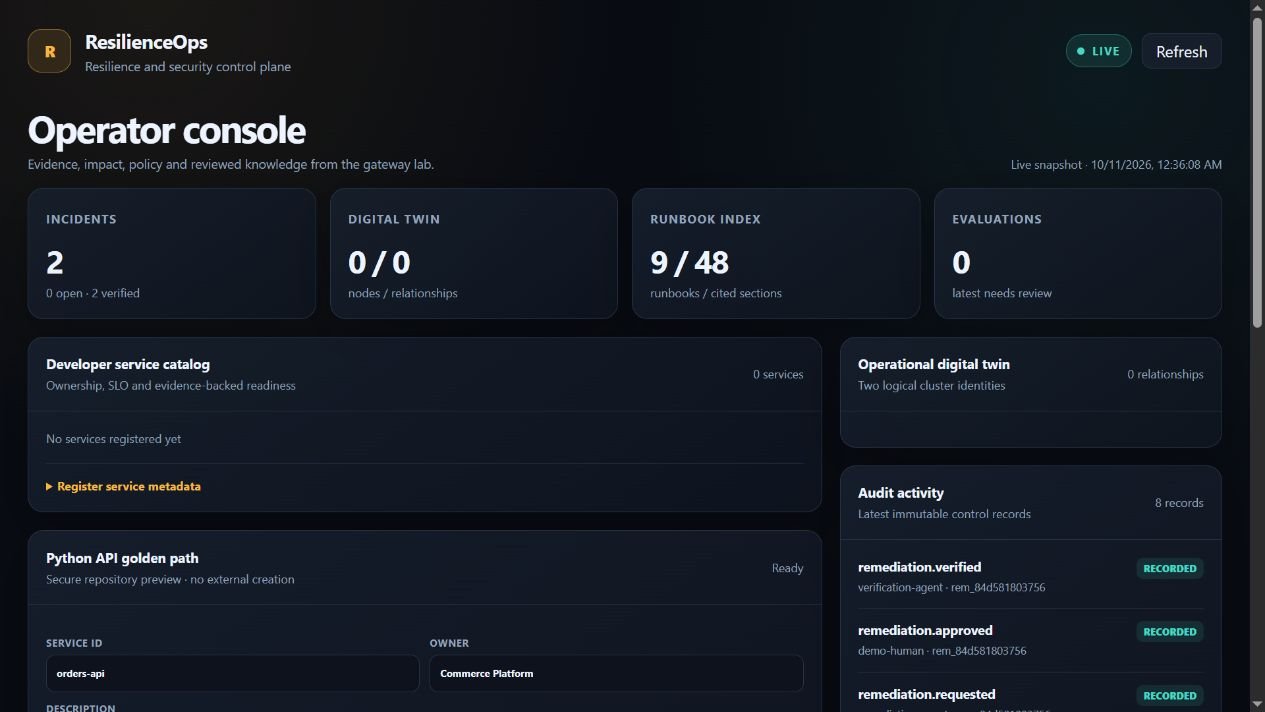 Original software UI · Explore 1 screen ↗
Under the interface
Select a component to see its role in the original application.
Component / 01
An operator reviews incidents, service context and recorded decisions.
Try the workflow
Public demo scope
The public exercise does not connect to cloud services, clusters or production servers. Its recovery actions change a fictional browser model only.
The local validation persisted incident, policy, approval and verification evidence.
The public exercise distinguishes blocked actions from approved model actions.
The public edition records its fictional decisions so visitors can review the reason and result.
Evidence comes from isolated local validation and original UI captures. These are engineering checks, not measured client business outcomes.
A fit for your workflow?
Discuss setup, adaptations, source access and delivery.